Simplify & Go to the Source

Hello Humans,
From my July 2004 Swiss field journal:
“Day 2, 7:35am -- I’m sitting in lobby and a man sitting behind me is saying ‘morgen’ to all who pass. I have been sitting here for 10 minutes and have heard him say ‘morgen’ at least 20 times. A few minutes ago, he was slowly and quietly playing his harmonica. He has a coke bottle with him. He is hunched over and looks to be drawing or coloring.”
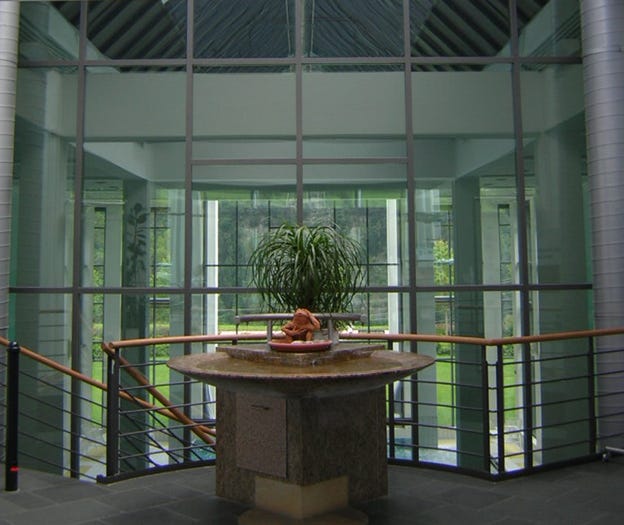
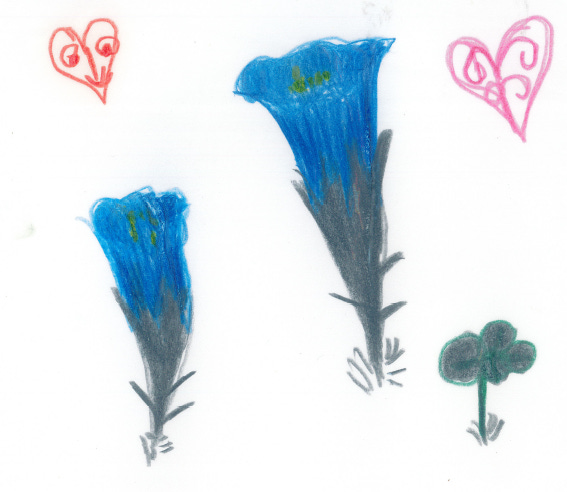
This is how my Day 2 field notes began. The man whom I called “Morgen Man” (Morning Man) in my notes, looked to be in his 50s with salt and pepper hair, a warm smile, and a gravelly voice. Even if I didn’t know it yet, I’d soon realize that Morgen Man was a clinic fixture. Nearly every morning, the metallic rattle of his adult bike with training wheels would slice through the stillness as he careened down the clinic’s driveway. He’d park at the front door, gather his bag of art supplies, then set up shop at a front lobby table to create art with colored pencils. Even though “morgen” was all we ever said to each other, I created connection by daily pointing to his current work in progress and giving it a thumbs up.
Over time, I learned from several clinic staff that Morgen Man was a former clinic patient. After discharge he relocated to a nearby village apartment and the clinicians theorized that he returned to the clinic daily because creating art helped him find purpose and meaning.
Noticing Morgen Man’s first appearance in my field journal takes me back to the space of trying to find my footing in a foreign place. That space, filled with uncertainty and tension, also held moments of comfort and clarity. I can still hear Morgen Man’s voice and the way his intonation scooped when he offered the gift of “morgen” to me and every person who passed.
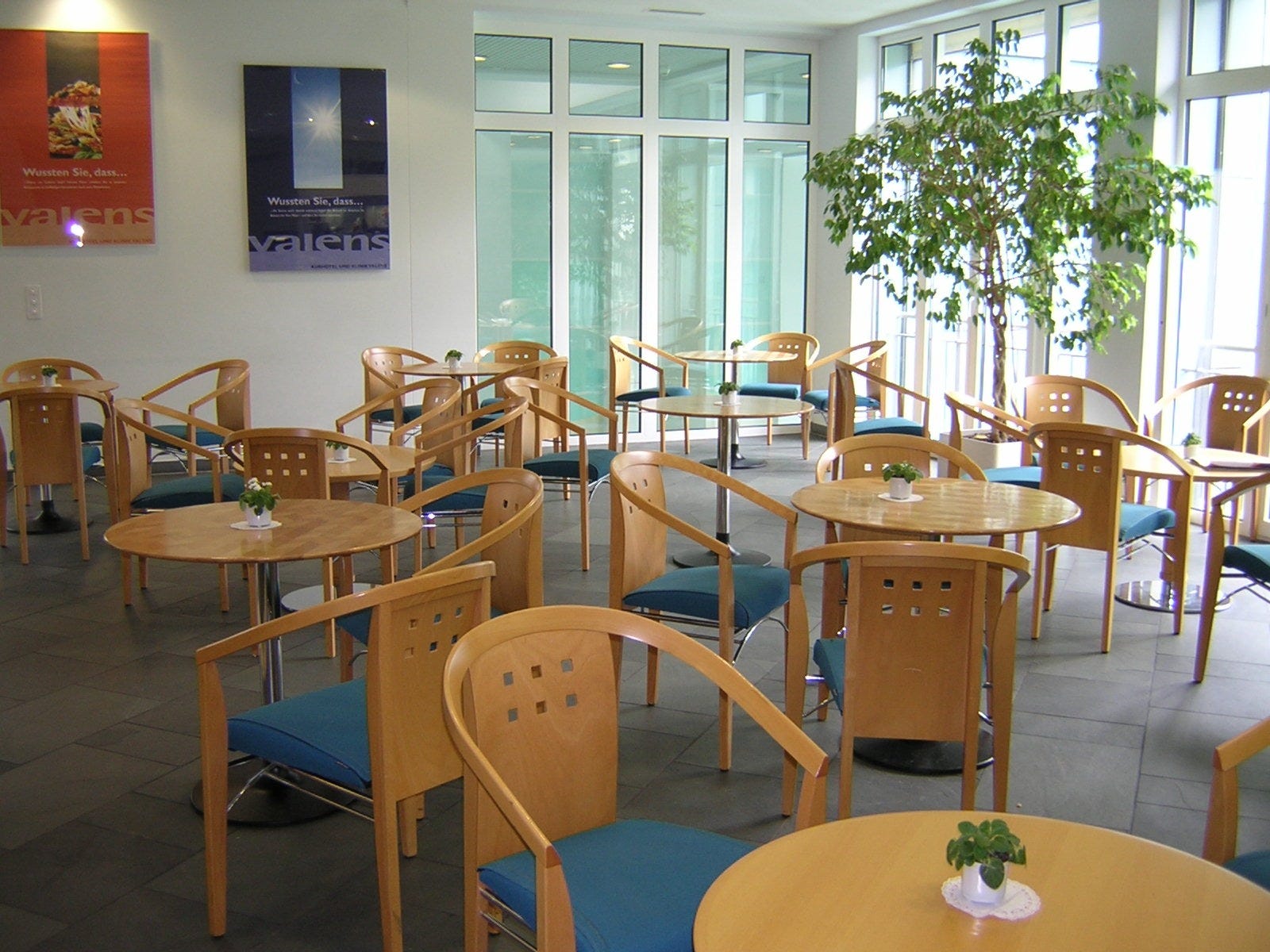
Day 2 at this clinic that specialized in neurological rehabilitation started in a lifted space when I noticed Morgen Man, but then spiraled into a series of existential questions after a physical therapist questioned my motivation for doing Multiple Sclerosis (MS) patient research. “Would you spend a few days with these individuals at their homes to see what their lives are really like?” she asked briskly. I answered with an honest, “I don’t know” because I’d never considered the prospect. That afternoon, I returned to the clinic’s lobby to write while fighting back tears.
“I feel like I’m using others’ disabilities for my betterment which I cannot stand. But I only feel that way when I lose sight of my goal and perspective which is to understand MOTIVATION. But that’s so overwhelming. How do I narrow my focus even more to make my research manageable and leave with some sort of concrete findings and results? My focus here needs to be simple and manageable, and simply put, it is to understand MOTIVATION. What makes people MOVE, what makes people GO?”
There was nothing I could do to take away the frustration and pain that the clinic patients were experiencing as a result of accidents, strokes, MS, Parkinson’s Disease, spinal injuries, and brain tumors. Remembering my purpose was the only way to find footing and move forward.
My job, I then reminded myself, was to keep showing up and remain engaged so I could secure MS patient interviews to hear from the patients themselves. The therapists and physicians were a tremendous resource, but they were not the primary source I was interested in learning from.
“Go to the source,” I said to myself, with “the source” being the patients. I knew that the patients’ voices were what mattered most, and this “go to the source” moment has become an anchor while navigating through research and learning spaces ever since.

“The source” can be dynamic in research and vary depending on where you are in the discovery process, what research questions are being asked, and what knowledge gaps exist. For my Swiss research project, the knowledge gaps could only be filled with patient responses to my interview questions. Now as an undergraduate research assistantship (UGRA) program mentor, “the source” for me is you students. Your regular feedback about how you’re experiencing research and what you’re learning are data points that help me steer us all toward growth.
Usually, UGRA professors are the first source of knowledge and direction for UGRA students. But eventually students may be tasked with discovering information that their professors don’t yet know, like learning the subatomic specifics of how dataset variables are measured. At this point, “the source” shifts.
Last year, one UGRA student regularly called a 1-800 helpdesk number to ask the lone dataset helpdesk employee about a national dataset’s methods and measures. After each phone call she’d report back to her UGRA professor with new knowledge that expanded their understanding of how to proceed with answering their research question. For a time, that 1-800 number’s employee became “the source” and I was thrilled that this student chose to connect with a person instead of resorting to ChatGPT that would have likely fed the student incomplete or incorrect information.
I have no problem with students using ChatGPT and other AI platforms to get started. Can’t figure out the correct syntax for one line of Stata code? ChatGPT might steer you in the right direction. Not sure what a research term means? Sure ChatGPT can help. Need to create a dataset with a comprehensive set of dates related to corporate mandates? AI can help you begin, but ultimately, it’s up to you to go to the sources that feed AI platforms to verify that the information is correct. When AI becomes a co-dependent crutch, that’s when things get tricky.
I don’t use AI because I don’t fear the “I don’t know” tension that holds great potential for growth. Although uncomfortable at times, this tension becomes easier to manage with practice. “Get comfortable with being uncomfortable” is a phrase I say to normalize the overwhelm that some students feel when presented with complex tasks where the only way through is to show up and do the hard work. It can take months or even years to piece together syntax or build a complete dataset that AI can help with in the beginning, but eventually many research tasks require human intellect to ensure that the data are correct.
Here are my two requests of new UGRAs.
First, you must take a giant step away from AI when doing UGRA work, and weekly research logs will hold you accountable to this.
Second, when stepping into our research space, accept that tension is part of the deal; learn how to press into it, learn how to work with it, play with it even, and then grow.
With enough time and research practice, your intuition will sharpen and managing research tasks will get easier once you find your rhythm and flow. If you're really lucky this sharpened intuition that was forged because your research experience will spill over into other areas of your life and serve you well. Don’t cheat yourself out of this growing opportunity by thinking that AI is going to do all of your research work for you. It can’t and it won’t. Begin to accept that you’re going to have to do some heavy lifting and hard work.
Anyway, back to Switzerland.
If it wasn’t for that physical therapist asking me an honest question at a moment when I needed to wrestle with my own purpose, then I wouldn’t have had the opportunity to sit with my discomfort, tap into my intuition, and remember that it was not my job to fix or save the patients. My job was to simply observe and ask the right questions to the correct people at the right time. Doing this required knowledge, tact, being physically present, noticing norms, blending in, speaking up, and learning to read between the lines.
My “go to the source” lesson and simplifying moment happened not because I avoided the tension but because I sat with it.