Let's Begin

When I started at Purdue as a graduate student 20 years ago, I learned that there are two seasons on campus – construction season and student season. The lines marking these seasons have blurred as construction season is now perennial at Purdue. But I’m very happy to report that student season has begun.
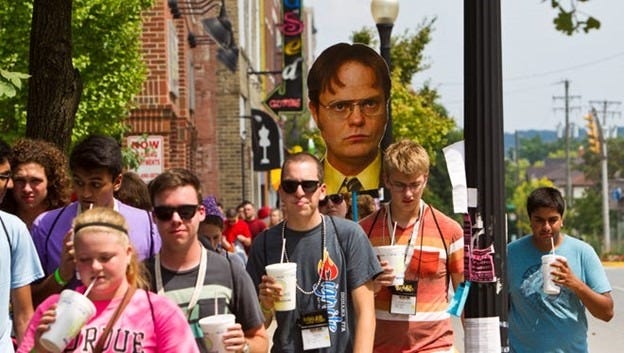
In the last few days, I’ve seen students disembarking from airport shuttle buses outside of the Union and herding their wheeled luggage toward student housing. Next week I’ll look for the Boiler Gold Rush (BGR) beacons that guide groups of freshmen to events around campus. Any BGR team leads with beacons from The Office will get a wink and a nod from me since that show kept my sense of humor intact during grad school. If I see a Dwight Schrute beacon next week, I’ll challenge myself to exclaim to the attached BGR group, “Bears! Beets! Battlestar Galactica!”
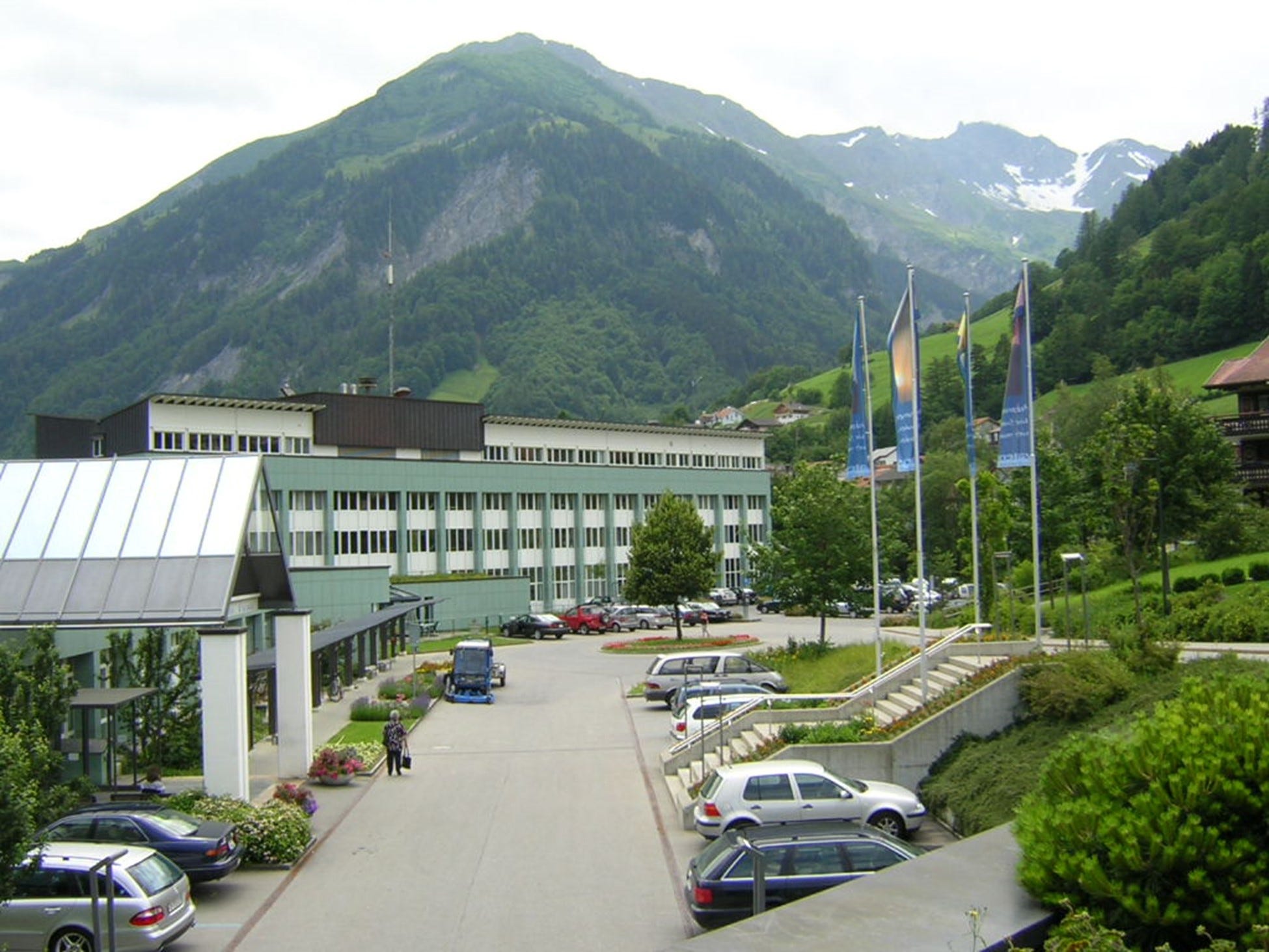
Beginnings are on my mind as I just rediscovered my masters thesis field journal. While pouring over the stapled sets of handwritten notebook pages, one set for each day that I observed rehabilitation at a Swiss clinic for three weeks in the summer of 2004, I remembered how I landed at this clinic with very good intentions (to understand!), a clear purpose (to observe and ask questions!), and no plan (*crickets*).
In big block letters at the beginning of Day 1 I wrote, “FACTORS THAT CONTRIBUTE TO PATIENT MOTIVATION TO START & CONTINUE WITH MULTIPLE SCLEROSIS EXERCISE REHABILITATION PROGRAMS.” Below that with less aggressive handwriting I wrote, “How are patients encouraged? What role does social support play in the rehabilitation process?” Then I began.
The notes are an interesting artifact because they remind me of what research feels like at the beginning. To me it feels like standing at the base of a mountain, looking up, feeling daunted, and wondering, “How on earth am I going to get to the top?” The answer is to start by taking one single step forward.
In my field journal, I appreciate how my 23-year-old researcher self was eager and optimistic. My Day 1 notes start at 8:15am, end at 5:00pm, and show that I approached the task of understanding the clinic with gusto. One clinic physician invited me to a “Rheumatalogie” lecture at 8:30am on Day 1, so I showed up at the room I was told to go, was the first one there, and in my field journal wrote, “Am I in the right place!?” Showing up and being present was my first step and thankfully I was in the right place. Even if the lecture didn’t make a lick of sense because it was in Swiss German, it marked my beginning.
From there my notes show that Day 1 was focused on finding my bearings and talking with clinic physicians and therapists to understand the who, what, where, when, and why of the clinic. Everything I did that day related to the capital letters at the top of my field journal’s first page. My purpose was to understand Multiple Sclerosis (MS) patients’ motivations to keep going while immersed in the clinic’s intensive inpatient rehabilitation program. This purpose was my beacon and in order to fulfill it, I had to connect with clinic staff and eventually ask if they could introduce me to patients with MS so I could request patient interviews. But first I needed to build trust and rapport with clinic staff and communicate what I was doing and why I was there. Most of the clinic’s staff spoke English which was a relief considering my Swiss German knowledge started with hello (grüezi) and ended with goodbye (tschüss), with hardly anything in between.
Lately, I’ve been thinking about my own motivation to inhabit research spaces whether an ocean away in Switzerland or here in Indiana, and the thrill I experience when watching college students begin their research adventure. To me, it all relates to the joy of connection and discovery. I want to illuminate invisible threads of connection between people and to support students as they help professors answer important policy-related research questions. To do this, I regularly ask students what they’re experiencing and listen closely to their response. I then use their feedback to shape our weekly research group meetings and reiterate that they are not alone and that it’s perfectly normal to feel frustrated and overwhelmed by the research process. Yet sometimes a few get stuck and begin to make excuses for not trying. In these moments I say to our group, “You must keep showing up and putting in the time. No excuses, no buts!” Even if the next step is unclear, you must always keep trying to find it.
To maintain momentum, I require students to keep a research log similar to my Swiss field journal that documents what they do every time they sit down to do research work, including start and stop time stamps. The more detail the better. Past students have told me that research logs have helped them understand where they’ve been, where they are, and where they think they’re headed. I read every research log, interact with what is shared, ask questions in the margins, draw emoji doodles, and provide suggestions and feedback when it feels appropriate. Then, at almost every weekly research group meeting I return the past week’s research log to its owner. I also require students to ask questions in their research logs… lots and lots of questions. No question is off limits and students are even welcome to ask the same question I once asked myself, “Am I in the right place!?”
As you students journey back to campus and settle in, I hope that you each take time to connect with someone you’ve never met, be kind and offer help to anyone who looks lost, and to remind yourself and others that we belong. We’ll have our first research group meeting in early September where we will begin by taking one step forward, and then another, and then another, together.