Identity

At the end of my first week at the Swiss rehabilitation clinic, several physicians and physical therapists invited me to join ward rounds. “We discuss with patients how they are doing and how to proceed,” Dr. B told me. The conversations would be in Swiss German but Dr. B promised to fill me in with an English translation while moving between patient rooms.
The clinic offered a variety of therapy options including physical, occupational, horseback riding, swimming, eating, sports, creative, and social group therapies that patients would participate in for about eight hours a day. Because the Swiss healthcare system paid for the three-week clinic stay for patients with Multiple Sclerosis (MS), these patients often returned annually to work on maintaining function despite the disease’s chronic and sometimes progressive nature. The absence of financial barriers gave MS patients from all socioeconomic backgrounds access to the clinic.
During rounds, the clinicians introduced me to several patients with MS and shared how I was an American student who would be hanging around to learn more about neurorehabilitation. The patients nodded, I smiled, and the physicians asked whether the patients’ tailored therapy schedules were helping them reach their therapy goals. Between rooms, Dr. B explained that patient goals often revolved around maintaining mobility. Take the patient we had just visited — this patient wanted to strengthen his legs and core enough to keep climbing the stairs to his flat without assistance. Maintaining strength meant that he could continue living independently.
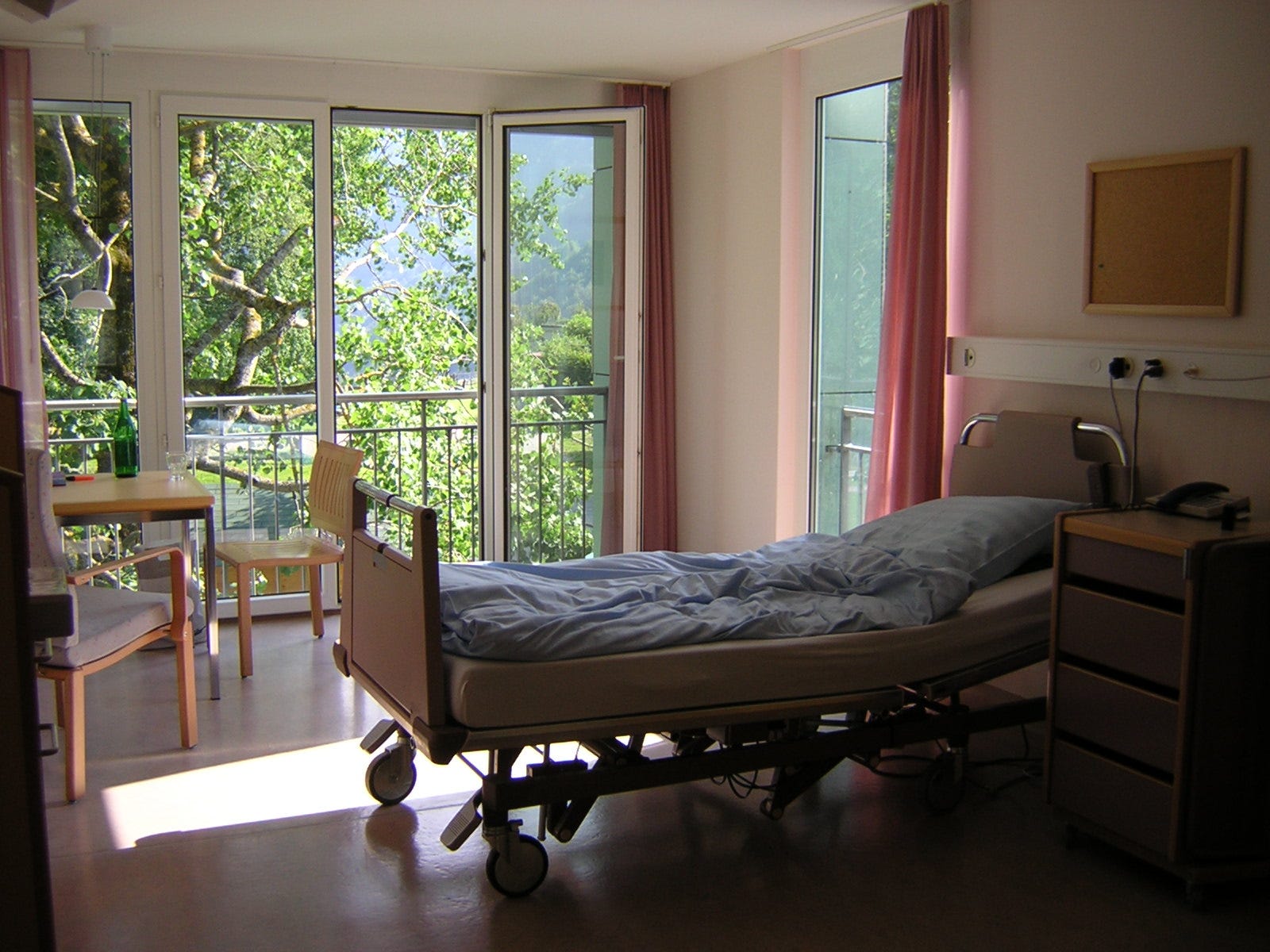
We entered the room a 30-year-old woman recently diagnosed with MS who sat on the edge of her bed. The group greeted her then asked questions about her stay. But as the word “therapie” (therapy) bounced around she began to cry. The group quieted and a female physical therapist approached to put a hand on the patient’s shoulder. I averted my gaze and focused on the framed picture of a blonde-haired little boy next to the patient’s bed. When the patient calmed, the comforting therapist asked a few questions prompting the patient to retrieve a therapy schedule from her purse. The team considered. The group discussed. A brief pause. Dr. B spoke to the patient in gentle tones. “Danke” (thank you) the patient responded.
Dr. B later explained that the patient was upset about group therapy. “She doesn’t want to participate in group therapy because people in the group aren’t ‘normal,’” he said. The patient had visited a clinic social worker the day before to explain her group therapy frustration and the social worker asked, “Do you think you’re normal?” Dr. B was not happy with the social worker’s question and expressed how difficult it is for newly diagnosed patients to participate in group therapy. “Sometimes patients can be cruel,” Dr. B said and then mimicked one patient talking to another, “I was walking just like you two years ago and now I’m in a wheelchair.”
Gradually, I was becoming aware of the clinic’s delicate social ecosystem. Not only were patients working to maintain or improve function, some were also grieving seismic shifts in their identities. Who were they in this clinic? Who was I in this clinic? My field notes suggest that my biggest fear was becoming a nuisance and distracting the therapists and patients from doing their important work.
“Can I attend a sports and recreational therapy session? When do they meet? Will it be a problem if I participate?” I asked myself in my notes.
I recently retrieved anthropology professor Robert F. Murphy’s “The Body Silent” from my bookshelf, the same copy I read in grad school that’s filled with my handwritten stars, underlines, exclamation points, and margin notes.
Murphy opens with this.
“This book was conceived in the realization that my long illness with a disease of the spinal cord has been a kind of extended anthropological field trip, for through it I have sojourned in a social world no less strange to me at first than those of the Amazon forests.”
Murphy’s first-hand account of living with disability includes reflections of his own rehabilitation experiences and his observations in rehabilitation settings.
“If a patient improves [as a result of rehabilitation], it is by degrees so fine that they are imperceptible from day to day. There are no magic potions – just hard, agonizing work,” Murphy wrote.
After listening to Dr. B share how difficult it was for some patients to cope with disability, I realized that the patients’ work at this clinic was not just physical, but also deeply emotional. And I was beginning to sense that rehabilitation’s purpose was to help patients navigate complex spaces outside the clinic that often remained resistant to universal design despite the fact that with increased life expectancy, many will eventually experience physical and social barriers resulting from functional decline.
Again, I reminded myself, it wasn’t my job to fix or save. My job was to hear from the patients themselves. My job was to ask, “What motivates you to do rehabilitation?” and then listen.
Still, I felt like my presence was a burden and worried that my research questions would make patients feel uncomfortable. Worse yet, I worried that my questions would distract the patients from accomplishing their rehabilitation goals similar to how the therapist’s question about my motivation on Day 2 had distracted me. I rebounded from the internal friction her question caused, but would the questions I wanted to ask the patients cause similar inner turmoil? As my anxiety amplified, I needed to find a way to quiet these thoughts enough to believe that staying put and finding a way through was better than packing up early and heading home.