Getting Comfortable with Being Uncomfortable

My first Saturday, I took a bus from my clinic studio apartment down to the neighboring town to stock up on groceries. It was in this town that I had the good fortune of running into a clinic physical therapist (PT) named Dom after missing my bus back up the mountain, and waiting for the next bus.
Dom and I chatted as “Sweet Home Alabama” played on the bus station’s radio. He said that the therapists were talking about me, “The American student,” and I said that I recognized him from one of the multidisciplinary staff meetings. I told him about my research and language barrier problems.
“I can help translate patient interviews,” Dom said.
Never had I heard such wonderful words. And to think that missing a bus allowed this connection to happen.
Because he attended graduate school in America, Dom spoke fluent English and suggested comparing Multiple Sclerosis (MS) patient schedules with his working schedule to find simultaneous breaks for patient interviews. It hadn’t occurred to me to ask any of the physical therapists for help after the one PT questioned my motivation for doing MS patient research the week before. Dom affirmed that my interview questions and my motivations were good, and we agreed to create an interview plan the coming week.
One of the first MS patient interviews was with a man in his late 30s, whom I’ll call Robert. I met Robert as he was being strapped into a physical therapy device called the Lokomat that was introduced to the clinic several months prior. I watched as the Lokomat PT secured the robotic exoskeleton around Robert’s limbs and then tightened a harness allowing Robert, who relied on a wheelchair, to stand. After checking that Robert was comfortable, The PT sat behind a computer, clicked a mouse, and the treadmill began to move. Robert took long, steady strides while looking at himself in a full-length mirror. I asked the PT about the mirror.
“It’s for the patient’s psychological benefit. It helps if they see themselves walking tall. It motivates,” the PT explained.
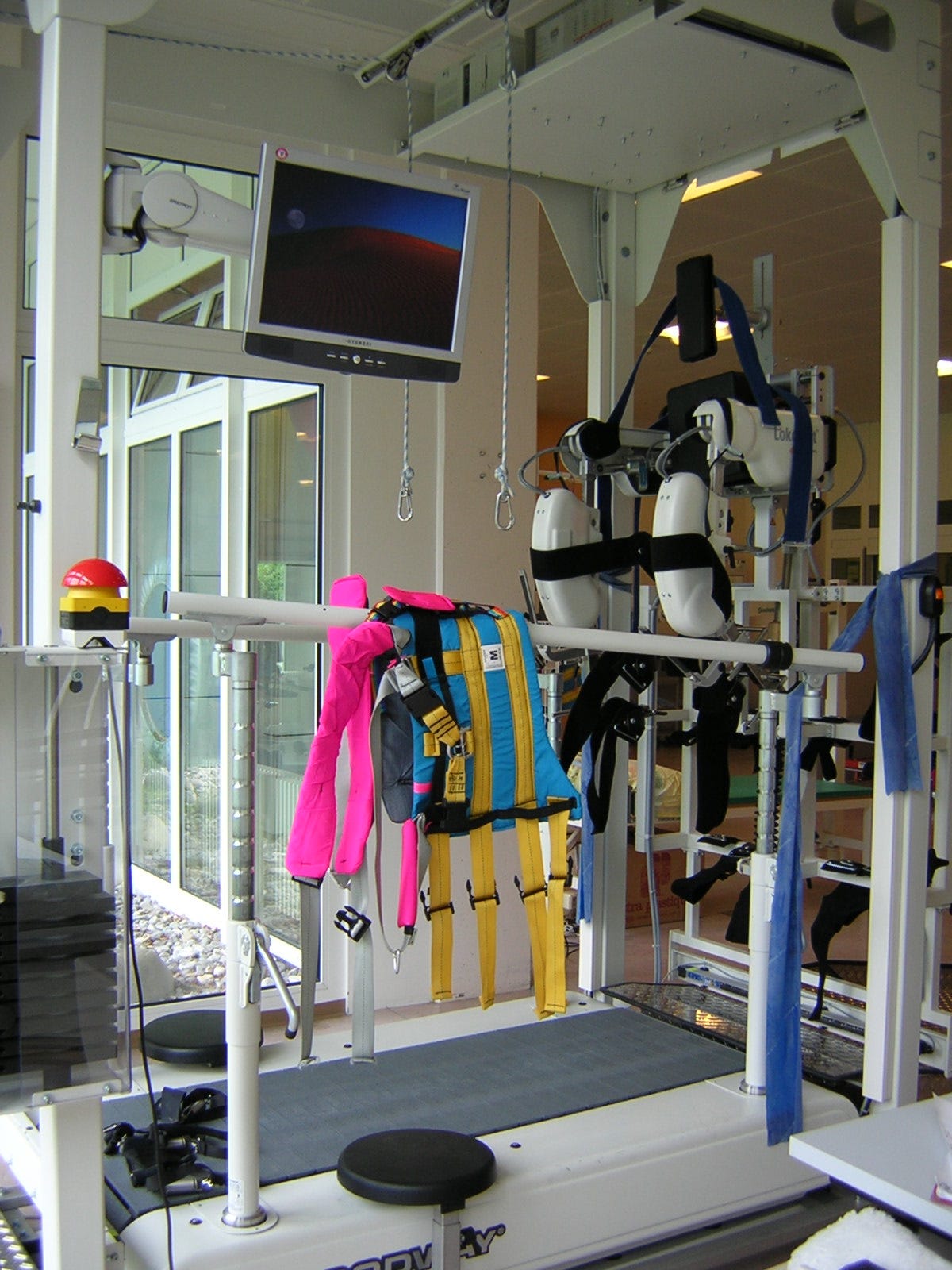
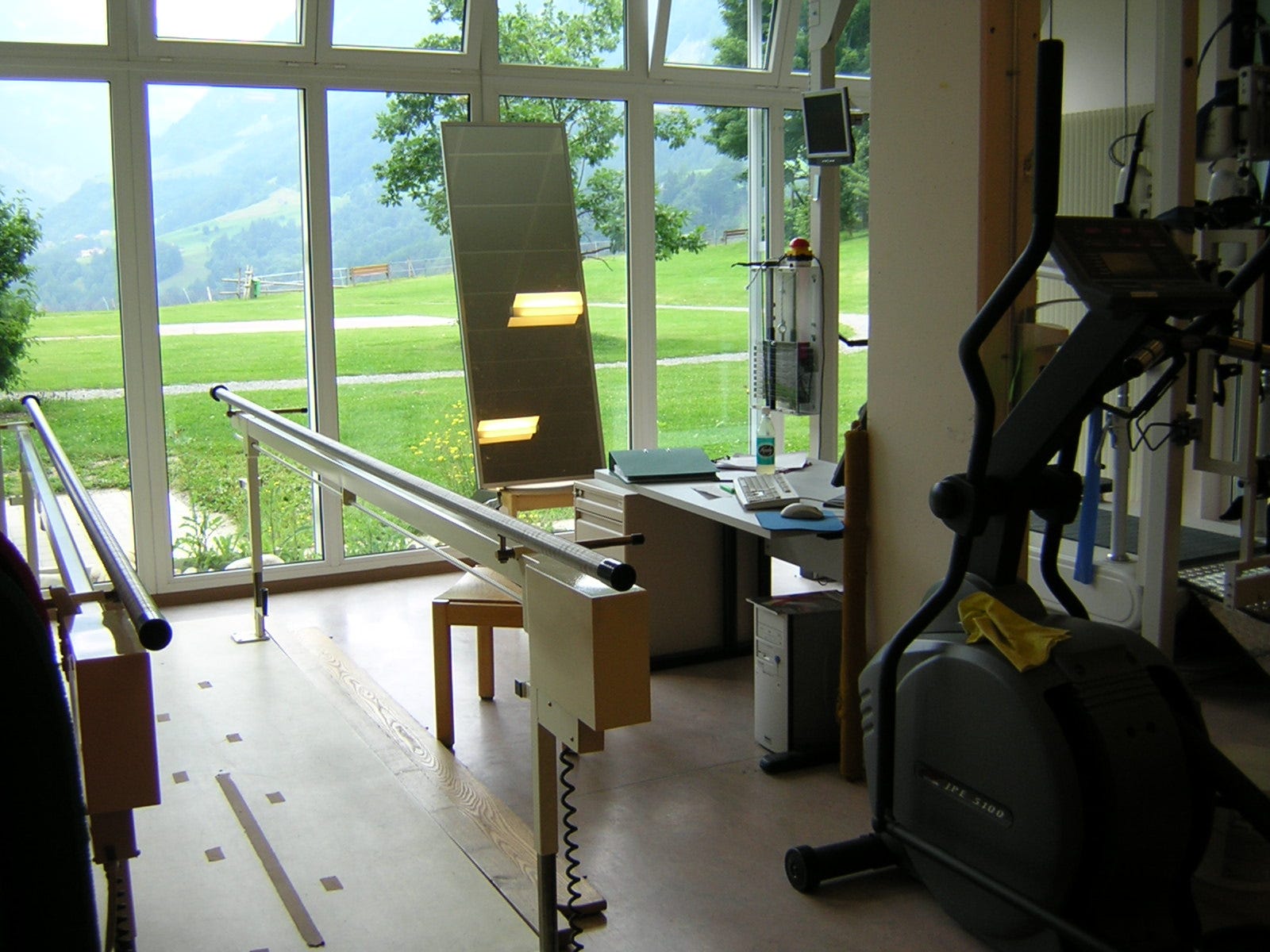
The Lokomat PT asked about my research and introduced me to Robert in Swiss German. He explained why I was there and Robert shared that he spoke a little English.
“Can she talk to you about your experience here?”
Robert nodded and all of the discomfort I had experienced the week before shifted to make room for possibility. I was starting to find my footing.
With the Lokomat PT’s translating assistance, Robert and I talked about his clinic therapies and he invited me to observe during his horseback riding therapy (hippo therapy) session with Maverick, the clinic’s therapy horse. Robert consented to me snapping a few pictures during his session where he towered over the two therapists who flanked Maverick’s sides. At the end of the ride, Robert thanked Maverick by offering an apple from his outstretched palm.
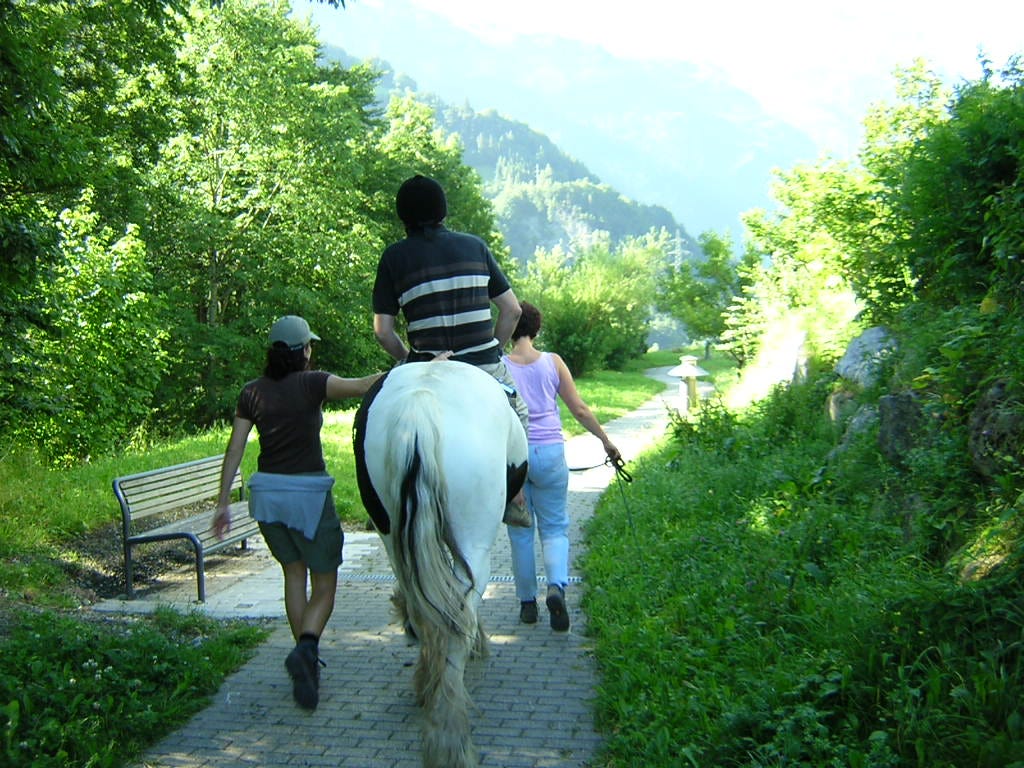
Later in the week during his interview with me and Dom, Robert explained how hippo therapy gave him “more power.” At home, he drove himself to weekly hippo and physical therapy appointments to help with core strength so he didn’t have to lean on objects for support. “For me it’s good here three or four in a week, it’s good for core stabilizing,” he said, referring to the clinic’s frequent hippo therapy sessions.
“For me it is strong, the high power on the horse, it’s good for me… It’s good when I get power for eleven months.”
Robert then reflected on his past clinic stays and his adjustment to living with MS. “Four year ago, I wanted to get better with my foot. And today, for me, it is not a problem with my friend,” and patted his wheelchair.
“Life isn’t any smoother, but he’s getting something from life,” Dom explained after listening to Robert share about recent life events, including divorce. But Robert still extracted joy from life and made a point to travel. “He was in Egypt two weeks ago for vacation, and he’s going to Athens this autumn for recreation,” Dom said.
Finally, Dom translated Robert’s response to my question asking what he does when motivation to do rehabilitation decreases. “He does have his low points, but what does help is that he has four kids who are a big help, and he has a good environment.”
Robert nodded and explained, using his own words.
“Four years ago, the son who’s eleven said to me, ‘Daddy, it’s good that you are sick… You have much time.’”
Robert’s story showed me important truths, including the link between social support and motivation.
Even if Robert’s interview was a turning point, I still felt unsure. Between observing and interviewing, I took breaks in the clinic’s main conference room that doubled as a library and reset by either reading journal articles about rehabilitation or writing in my field journal. Around the time of Robert’s interview I wrote this of my clinic experience. “There are moments, and brief moments at best, where I feel I may be getting somewhere… Even if I had the option of giving up, I wouldn’t. I’m determined to persevere.”
Seeing the way that patients like Robert approached rehabilitation with gracious tenacity motivated me to keep going, and to accept that my own comfort was not a research objective. Getting comfortable with being uncomfortable was the only way I could keep moving forward in the research space.
" Getting comfortable with being uncomfortable was the only way I could keep moving forward in the research space." LOVE this and how your voice shines through!